
Even with less than four dozen in number as listed entities, the PSUs account for over 20 per cent share of the overall market capitalisation of the more than 4,000 entities at the bourses.

'The country is a good test bed for enterprise adoption, but to scale rapidly, companies will need to look outside the country for customers.'

Finance Minister Nirmala Sitharaman had in May announced that there will be a maximum of four public sector companies in strategic sectors, and state-owned firms in other segments will eventually be privatised.

Vice President V V Giri's resignation in 1969 triggered political upheavals that saw the ruling party defy its own presidential nominee, the expulsion of a sitting prime minister by her party president, and a historic split in the Indian National Congress, recounts Utkarsh Mishra.

'What is working is quality management, great teams, engineers, platforms, and highly differentiated services.'
The Union government on Wednesday constituted a Board for Reconstruction of Public Sector Enterprises.\n\n\n\n
The government is reviewing a proposal by an expert group to lower the weightage to financial parameters of central public sector enterprises while fixing their overall annual targets.

The finance minister continues to be backed by the same policy team in charting out the broad strategy as in the few earlier Budgets.
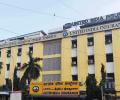
The NITI Aayog has recommended privatisation of state-owned insurer United India Insurance Company as the government aims to move ahead with its new public sector enterprise (PSE) policy for Atmanirbhar Bharat. The policy think tank has suggested that the public sector insurer be considered for privatisation in the banking, insurance and financial services sector, which has been classified as 'strategic' in the PSE policy, said an official. The policy proposes the "bare minimum" presence of government-owned companies in strategic sectors, and privatisation, merger or closure of remaining public sector undertakings (PSUs).
More than 300 posts of independent directors have still not been filled.

Corporate social responsibility for a state-owned firm may no more be a "photo opportunity" for its chairman but would involve people-centric projects to be funded by 2-5 per cent of the company's net profits.
Giving a shot in the arm to ONGC chairman Subir Raha, who has been resisting appointment of additional government directors on the company board, the department of public enterprises on Wednesday said their number cannot exceed two.

Shares of public sector enterprises have corrected by up to 22 per cent month-to-date until March 19, 2024. Analysts attribute this steep fall to the valuation exuberance seen after a sharp run in these counters last year and suggest investors remain selective regarding the stocks in this space. "The rally in public sector undertaking (PSU) stocks has been stretched and sharp, although it is somewhat justified by improvements seen in earnings, operations, balance sheets, and overall profitability.

The annual pay of a PSU employee on an average increased by 13.7 per cent to Rs 6.6 lakh in 2010-11, the Public Enterprises Survey for 2010-11 has revealed.

Enterprising women business correspondents, known as BC Sakhis, have facilitated transactions worth Rs 27,000 crore in Uttar Pradesh, earning Rs 75 crore in commission over the past four and a half years. BC Sakhis, appointed under the nationwide women empowerment programme, are members of self-help groups (SHGs) who are trained and certified to provide banking and financial services in rural areas.

'Make in India' could suffer the same fate as did privatisation and the command economy, says Ajit Balakrishnan.
Industry associations and companies in the United States, including the US Chamber of Commerce, Coalition of Services Industries and the iconic bike company Harley Davidson have called on the Donald Trump dispensation to push India to reduce tariffs, non-tariffs, and regulatory barriers to boost American exports.

Households are likely to remain the primary net lenders to the economy in the coming decades.
This is significant as the turnover of the CPSEs during the whole of 2007-08 went up by 12.13 per cent to Rs 10.82 lakh crore (Rs 10.82 trillion). The 36 per cent increase in turnover recorded by the central PSUs during the first half does not reflect the impact of the global financial meltdown on the performance of the state-owned companies.

The central government-owned companies shed 31,000 employees during 2008-09, the year which witnessed global economic downturn hitting the world economies including India.

'Retail investors, who had not seen such a massive correction in the SMID universe since COVID-19, are witnessing something like this for the first time. Panic profit booking may continue.'

Finance Minister Nirmala Sitharaman on Friday pitched for front loading of capital expenditure, saying it is critical for revitalisting the economy post the coronavirus pandemic. During a virtual meeting with senior government officials to discuss the infrastructure roadmap ahead, she also asked ministries to aim to achieve more than their capital expenditure (capex) targets. The Union Budget 2021-22 provided a capital outlay of Rs.5.54 lakh crore, a sharp increase of 34.5 per cent over the Budget Estimate of 2020-21.

Considering the disvestment mop-up target of Rs 30,000 crore (Rs 300 billion) for financial year 2012-13, the government is thinking of optimising the collection from stake sales in central public sector enterprises (CPSEs).
ONGC has emerged as the top performer among the public sector enterprises, registering a net profit of Rs 10,529 crore in 2002-03, while the Fertiliser Corp earned the dubious distinction of topping the loss-making undertakings.
The number of loss-making state-owned enterprises was 54 as on March 2008. The cumulative losses in these enterprises increased to Rs 96,636 crore (Rs 966.36 billion) in 2007-08 from Rs 77,826 crore (Rs 778.26 billion) in 2004-05.

'If you align your ambition with India's rise, the peak of your careers will unfold alongside the peak of India's power.'

India's corporate sector, including public sector enterprises (PSEs), continues to go slow on investments and capital expenditure (capex). According to data from Motilal Oswal Financial Services (MOFSL), corporate investments declined for the second consecutive quarter in the April-June period (first quarter, or Q1) of 2023-24 (FY24). After a contraction of 0.5 per cent year-on-year (Y-o-Y) in the 2022-23 (FY23) January-March quarter, corporate investments likely fell 6.2 per cent Y-o-Y in Q1FY24, write Nikhil Gupta and Tanisha Ladhaa of MOFSL in their recent report on corporate investments.

In June, Sensex went up 6.6% and Nifty 6.9%, their best monthly gains since December 2023.

Kerala will invest Rs 4 billion (Rs 400 crore) in the tourism sector in the current fiscal, State Minister for Home and Tourism Kodiyeri Balakrishnan has said.
Amid slowdown blues, the government has unveiled a raft of measures over the past few months aimed at improving liquidity in the system, moderating interest rates as well as credit growth apart from addressing stress in the NBFC sector.

Ahead of the Budget, the government has achieved almost half the divestment target of Rs 65,000 crore. FY23 divestment receipts are unlikely to be anywhere close to the budgeted target.

'About $8.5 billion in free cash, about $3 billion as annual debt refinancing, and $3 billion-4 billion in fresh borrowing. An additional $1.6 billion-1.8 billion will come from development profits in 2025-26.'
Heaving a sigh of relief, the apex association of Public Sector Enterprises, SCOPE, on Friday commended the Centre for shelving privatisation of 13 PSUs.
Bharti Global, the international investment arm of Bharti Enterprises, has decided to buy 24.5 per cent equity in BT Group - a move that will make the Indian conglomerate the biggest shareholder in the UK's second-largest telecom company both in terms of market value and subscriber count. The shares are being purchased from billionaire Patrick Drahi's Altice UK through a combination of cash and debt .
This happened in a year which witnessed the overall increase in the CPSEs' profits from Rs 89,578 cr a year ago to Rs 91,140 cr. It is not linked to the global financial crisis, which resulted in the loss of jobs of 5 lakh workers during four-month period ending December 2008. The CPSEs' employee strength has been reducing since 2001-02, during which they had a staff of about 20 lakh. The number fell gradually to 16.14 lakh during 2006-07 and further to 15.7 lakh in 2007-08.
